Add your promotional text...
Expert E-Learning Solutions
Transforming corporate training with 20+ years of experience.
About Me
I offer 20+ years of experience comprised of curriculum and instructional design, process strategy, e-learning development, technical writing and training, benefits administration, workforce management, as well as project and process management including people supervision across the globe. With a strong background using instructional design models, agile development, and strategic backward design when creating computer-based training (CBT) and instructor led training (ILT), I use current adult learning theories for the best learning outcomes. I partner with SMEs and senior managers, analyzing needs to bring the training vision to reality by leveraging my expertise in learning science and techniques. I consistently innovate and deliver memorable and impactful learning experiences with traceable ROI.


My Mission
I love building and transforming learning into an enjoyable task for adults, empowering them with lifelong learning skills and memorable professional growth strategies, all in an anxiety-free environment. I accomplish this by creating and curating cutting-edge asynchronous and synchronous content, engaging both the learner and the facilitator.

From ADDIE to ADDIIEE
The instructional design process is not a simple, linear path but a complex, iterative cycle with a myriad of detailed steps within each major phase. The popular ADDIE model (Analyze, Design, Develop, Implement, Evaluate) provides the primary framework, but it is supported by dozens of more granular actions and sub-processes to ensure the final learning product is effective and efficient. To that end, I've incorporated two additional major steps within the process, and now the revised ADDIIEE model includes success measurements, ongoing maintenance, and eventual sunsetting of the course.
Below is a 10,000 foot level of each step, with large bullets giving a nod to the "big rocks first" concept, popularized by Stephen Covey, identifing and prioritizing the most important steps with many pebbles and bits of sand that also follow.
⚫ A: Analysis – I'll be thinking “Will training address the issue you're trying to resolve?”
At the initial build, determine if this is this a once and done, or is there ongoing work required for this learning, and if ongoing, for how long?
I'll ask you to identify your objectives by explaining the need.
I'll explain that development rarely follows the Waterfall model, and is not a sequential process with distinct stages.
⚫ D: Design – I will blueprint the learning structure around your objectives by creating a scope document.
I'll use modules to chunk information and allow for re–use and re–sequencing.
I'll be decisioning how should the training be offered, such as:
o Traditional facilitator led training (in person or Zoom).
o Self-paced learning without the need for live interaction.
o Blended learning that combines both elements of synchronous and asynchronous learning.
⚫ D: Development – This is where the building of the training happens, including:
Collaboration across teams on various aspects such as job aids, complementing other projects, and learning activities.
Ensure all elements of the training support the identified objectives.
Level setting expectations with stakeholders that agile development is an iterative and flexible approach that allows for:
o Fluid or changing requirements.
o Small chunks of learning are shared ensuring a continuous flow of feedback and adaptation, repeated in short sprints.
o The parallel review strategy promotes continuous feedback from stakeholders and refines the module in sections.
o Each sprint eventually results in a functional part of the course/module being "signed off" and approved.
⚫ I: Inspection – I've added this additional step because I've discovered this is more realistic in the flow of the steps, including:
Pilot Test the module – Designer and Proofreader
Beta Test the module:
o User acceptance test (UAT) – SME / Stakeholders.
o Quality assurance test (QAT) – Technology.
⚫ I: Implementation – I've added more to the section including:
Pre–release – Managers/Facilitators:
o Present training as if it was real.
o Course material is turnkey ready.
Deployment – Target audience:
o LMS turned on for learners.
o Reporting turned on for managers.
o Push materials to learners.
⚫ E: Evaluation – This includes short term and long-term project management to determine if both the learner and the outcomes are met.
Use reporting to evaluate learners’ test scores according to either the Pareto 80% Principle, or scenario 1:1 ratio requiring 100%. Near Term.
Analyze report data to guide revision plans. Is rework or rewording needed for evaluation or delivery methods? Near Term.
Observe and measure changes in the workplace. Mid and Long Term.
Report viewers and stats on annual departmental statistics.
⚫ E: Edit – Using backward design, I've added a plan to prepare for ongoing maintenance.
Review the objectives, content, and delivery methods for current organizational goals and effectiveness.
If a change is required, resolve to:
o Refresh the existing materials, or
o Replace with new materials (and update all agendas / course links, if required), or
o Remove content from the LMS and all agendas /course links.
Samples
Microsoft Powerpoint
for "from scratch" courses requiring a base format, also for loading to an Learning Management Systems (LMS).
Microsoft Word
for facilitator and student guides (usually printed as a PDF - Portable Document Format).
Microsoft Excel
for agendas and reporting from an LMS, using VBA for specialty formatting of flat files.
Adobe Captivate
for "from scratch" scenario based, interactive courses.
Articulate Storyline 360
for "from scratch" scenario based, interactive courses and gamification.
Articulate Rise 360
for agendas and reporting from an LMS, using VBA for specialty formatting of flat files.
Techsmith Camtasia
for video editing.
Vyond Go 360
AI Video Generation
For Inperson Interview
presenting on 10/30/2025
Synthesia (free version)
AI Video Generation
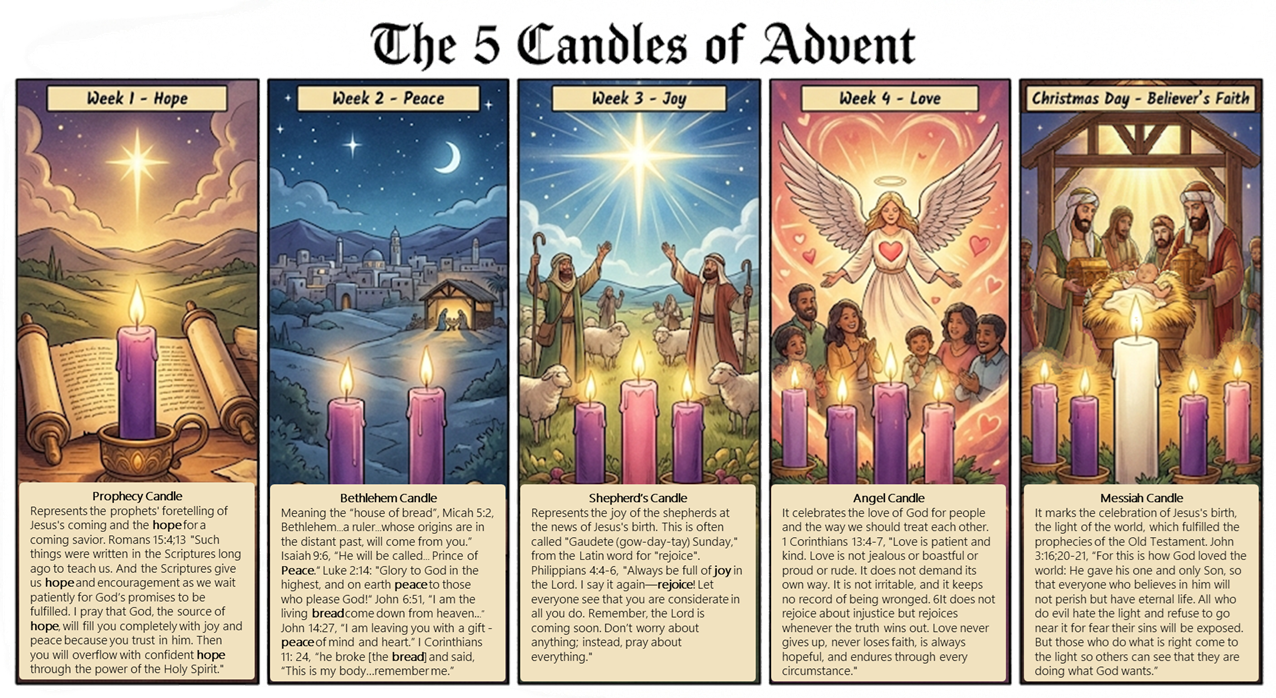
Gemini / Nano Banana
AI Generated Holiday / Advent Graphic
Résumé
Updated: December 4, 2025
Contact
Boni.Kreider@gmail.com
(757) 515-5989
© 2025. All rights reserved.